Originally published in The Baum Bugle, vol. 59, no. 3 (Winter 2015), pgs. 56–58
Citations
Chicago 17th ed.:
Kilgore, Garrett. Review of The Wiz Live!, Baum Bugle 59, no. 3 (2015): 56–58.
MLA 9th ed.:
Kilgore, Garrett. Review of The Wiz Live!, The Baum Bugle, vol. 59, no. 3, 2015, pp. 56–58.
(Note: typographical errors have been left in place to accurately reflect the printed version.)
NBC’s The Wiz Live!:
Third Time’s the Charm
On December 3, 2015, NBC presented its third annual live musical. The first year, a rocky but relatively well-received, The Sound of Music climbed the mountain to 18 million viewers. NBC followed up the next year with another classic family show, one that, by and large, was created for television, Peter Pan. While it was the highest-rated show of the night, it still brought in only about 9 million viewers. Pan, unlike Sound of Music, relied on lots of sets, special effects, and less star name and talent, and the ratings reflected that. So the network set its sights on another family story, but with a twist… The Wiz.
The Wiz Live! was not the most expected choice; the 1978 film was not (despite this reviewer’s own feelings) a good film, and there had not been a first-class Broadway revival since 1984. However, it offered lots of opportunities for star talent to not have to work as hard as they might in a more traditional show. It also offered the chance to right some of the wrongs of the bloated 1978 film, as well as to bring the show to a modern audience., which they did, to the tune of 11 million viewers and the best reviews of any of the three annual musicals.
Personally, I was wary of the production. The big names (most of whom had theater/film backgrounds) made it promising, but a new book, as well as the removal of a few songs, made me wonder just what we were in for. Having hate-watched the first two, I was fully braced for disappointment. Thankfully, I couldn’t have been more wrong.
Unfortunately, I have to disregard Evillene and her desire for “No Bad News.” The evening was not perfect. However, there is plenty of good news, so we’ll get the bad out of the way first.
As is always the case with any live musical theater, there were sound issues. The balance was off, though it got better as the evening went on. Thankfully, having re-watched the show on Hulu, I noticed they fixed the mixing issues after it was over. There also were camera angle issues, effects that didn’t quite go off properly, and an unfortunately delayed cut so that viewers saw only two clicks of the silver slippers. But these issues were few and far between. The lack of a live audience was less apparent than in the previous live productions. In fact, by using a more proscenium setting, many of the quick-cutting problems that plagued Pan and Music were solved. Even so, many of the jokes would have played better before a live audience.
More unfortunate was Cirque du Soleil’s appearance. Given how hyped the performing troupe was, and that they had a production credit, I really expected both the “Tornado Ballet” and “Funky Monkeys” to be truly breathtaking. Instead, they were short, confused, and not all that well executed. The TV production wisely left the Yellow Brick Road dancers out, and probably should have left the Tornado dancers out too—sometimes what works on stage is too inherently theatrical to work on screen. The monkeys, renamed Winged Warriors (at least they weren’t on motorbikes), were scary, but the sequence was over so quickly, it didn’t matter.
Less distressing were the revisions to the book, score, and orchestrations. I was too young to have seen any of the Stephanie Mills tours of the original run on Broadway, but I did see the Encores! revival in 2009, and the book felt somewhat dated, but played well. Here, they took the book and removed about 25 percent of it. To be fair, the book was probably the weakest part of the show to begin with, but what was dated about it felt very dated.
The producers enlisted Broadway veteran Harvey Fierstein to doctor it up. This was a wise choice—of the book doctors out there, Fierstein has the best track record, and since they presumably did not want a night of gay jokes, Douglas Carter Beane was not a safe choice. Thankfully, the majority of the new material was never intrusive and felt fresh and modern without being at odds with the material. The revision to the Kalidahs was smart and actually made the scene a bit scary. The updated backstories for Tin Man and the Wiz were a nice touch.
The most unusual choice was to give Dorothy a choice—go home to Kansas where Aunt Em lives, or back to Omaha where her school and friends are. This is a modern Dorothy, who has lost her parents in an unspecified accident, and, as such, she is struggling with having lost her parents, friends, and all things familiar. In many ways, going to Oz isn’t a real change, given that she’s been in unfamiliar territory with Aunt Em. In fact, initially, it’s Omaha that she wants to go back to. “There’s No Place Like Home” isn’t enough for this Dorothy. And, unlike Diana Ross’s Dorothy, home isn’t knowing who you are. For this Dorothy, home is where love is. She was loved in Omaha, but she needs to be in her new home with Aunt Em. It’s a powerful message, and one that is smart for a modern audience. To be sure, there are those who won’t like this, but for a modern and more cynical time, it works beautifully.
The score also remained about 75 percent intact. The only time the live production transitioned into the territory of the 1978 film was the Scarecrow’s first scene, which was basically lifted directly from the movie; it stuck out like a sore thumb, and, quite honestly, the less said, the better. If you really want to see the song, watch the 1978 film, because at least it’s Michael Jackson.
Alongside “I Was Born on the Day Before Yesterday,” we also lost “Who Do You Think You Are,” “A Rested Body is a Rested Mind,” and the Wiz’s “If You Believe.” While the first two are good songs, their being removed was unsurprising, as neither really does anything for the action. The loss of “If You Believe” was a bit inexplicable. Many productions give both versions to Glinda, which gives her more to do, but NBC left it out entirely. I presume it was cut for time, but my (admittedly casual) research has turned up nothing.
The only new song, written by Ne-Yo for the end of Act One, was dismal. It’s an okay song, but it didn’t mesh with the rest of the score and didn’t serve enough purpose to be worth the time spent on it—time that could have gone to a longer “Funky Monkeys” or “If You Believe.”
This brings us to the good news—everything else.
The designs by Derek McLane and Paul Tazewell were magnificent. They conjured up a quick-paced moving world of color and magic, but never distracted from the characters or the story itself. My only complaint was putting Amber Riley’s Addaperle (the Witch of the North) in shades of blue against a pink and orange and yellow Munchkinland; it was a bit headache inducing.
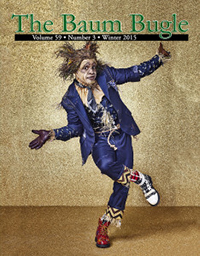
The cast itself was uniformly very good. Mary J. Blige as Evillene and Elijah Kelley as the Scarecrow were perhaps the two weakest members of the cast. With their talents overshadowed by less-than-stellar acting (in the case of Blige) or nightmare-inducing makeup (in the case of Kelley), they left very little impression. Queen Latifah as the Wiz was no real revelation, but her performance was solid and enjoyable. The same goes for Amber Riley and David Alan Grier’s Cowardly Lion.
The true stars of the evening were Uzo Aduba as Glinda, Stephanie Mills as Aunt Em, Ne-Yo as Tin Man, and, of course, Shanice Williams as Dorothy.
Aduba, known to most as Crazy Eyes from Orange is the New Black, looked stunning in her Perfume Bottle Gold dress, and she gave a strong, nuanced performance as Glinda. Much like Lena Horne in the 1978 film and Dee Dee Bridgewater (presumably) in the original Broadway production, she commanded every bit of the stage during her all-too-brief appearance, making “If You Believe” a three-act grand opera.
Mills is a spitfire of an actress and strongly talented singer. Her presence, much like Aduba’s, was all too brief, but she too commanded the entire stage, and one could easily understand why Dorothy would both love and not want to not be with Aunt Em at the same time.
Ne-Yo, for me, was perhaps the biggest surprise of the evening. I knew he was a fantastic singer, but I was unprepared for his heartwarming (no pun intended) performance. More than any of the friends, he poured everything he had into his performance. His rendition of “(What Would I Do) If I Could Feel?” was powerful, beautiful, and simple. There was no vocal trickery (as is often the case with R&B-style songs), and there was no falsehood—just the simple truth of a man who longed to feel again. For once, it was clear that Dorothy would not be missing the Scarecrow most of all.
Which leads us to Williams. After the disaster of Peter Pan, NBC took a gamble hiring a newcomer, and it paid off. Williams was everything Dorothy needed to be—sweet, strong, and lovable. She had the unenviable task of being our gateway into Oz, and if you weren’t with her 100 percent, then it would have fallen apart. Thankfully, she had everything needed to make it work. Her performance of “Home” brought more than a tear to the eyes of those with whom I watched the show, and I am sure we were not the only ones. This young actress has a very bright future, and I can’t wait to see what comes next from her.
The Wiz Live! is aiming for Broadway in the 2016–17 season, and it had a very strong start. With a little re-casting, some tweaking, and hopefully losing the dreadful “You Can’t Win,” it could be a bona fide hit once more. Only time will tell, but I, for one, will happily ease on down the road again.
Authors of articles from The Baum Bugle that are reprinted on the Oz Club’s website retain all rights. All other website contents Copyright © 2026 The International Wizard of Oz Club, Inc. All Rights Reserved.